October – December 1918
(and the burning question of whether or not he shot his horse)
~ by Helen Dennis, 13 September 2026 ~
The nearest approximation I have to first-hand accounts of my grandfather’s experience during World War I are stories my aunt Penelope told me. However, she was in her 90s by the time I was interested, and her memory was a little sketchy.
She was also fond of drama.
Penel told me several times that when the war ended, my grandfather Richard Jenkins, who was serving with the Light Horse in the Middle East, chose to shoot his horse rather than ‘leave it in the desert with the Arabs’.
Richard’s war experience was, no doubt, horrific. How dreadful then, I thought, that on top of everything he went through, he’d also had to take the life of his faithful equine companion.
But was that story true? At the risk of appearing to be fact-checking Penel, I feel I need to fact-check Penel. And to do that, I need to investigate the latter part of Richard’s war service in greater detail.
Australia (as part of the British empire) was officially drawn into World War I on 4th August 1914. Richard, then 21, enlisted four weeks later, on 1st September. He became a member of the 1st Australian Light Horse and sailed for the Middle East in October, arriving at the Army’s training camp in Egypt in early December 1914.
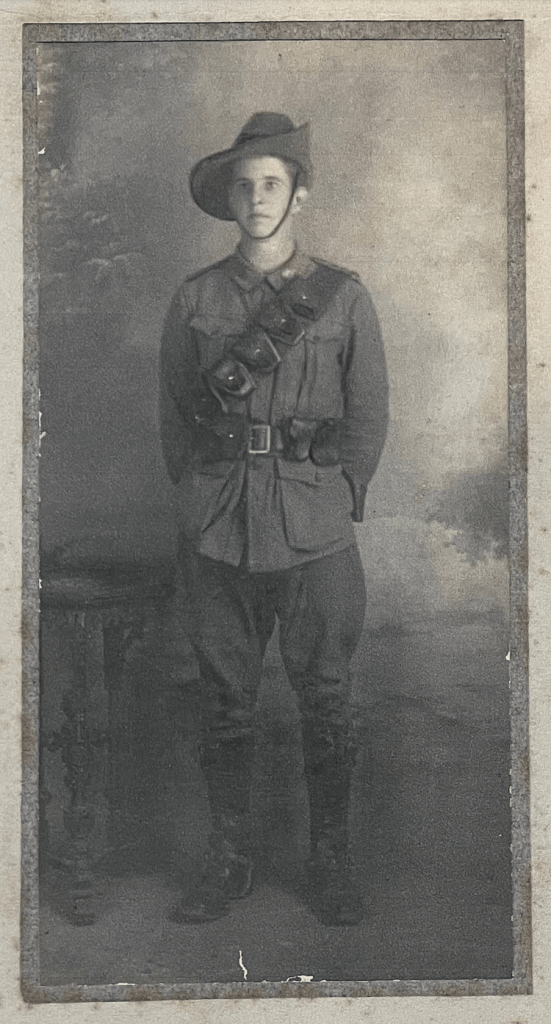
The following May, Richard’s unit was sent to boost troops at Gallipoli. On 29th of that month, Richard was stationed at Quinn’s Post when he was involved in what was later described as one of the most dramatic attacks of the Gallipoli campaign. According to family lore, Richard was ‘standing on a mine when it exploded, and was hurled about 20 feet into the air’. As I mentioned, Penel was partial to a little drama and no doubt would’ve savoured that portrayal. But those weren’t her words. That particular description appeared in The Armidale School’s Old Boys magazine and was provided, I believe, by Richard’s brother Victor. Richard survived, but was wounded in his left knee and lumbar region. He was evacuated but didn’t reach the convalescent camp at Mustapha, Alexandria (Egypt), until 10th June 1915.
Interestingly, this incident was re-counted in an episode of ‘Who Do You Think You Are’: Peter Hellier’s ancestor was injured in the same event. The show’s historian described the events in detail: how the Anzacs had been attempting to hold a critical ridge encompassing Pope’s Hill and Quinn’s Post and that the position was one of the most dangerous on the Gallipoli fighting front; that on some parts of the ridge at Quinn’s Post only ten metres separated the Anzacs from Turkish trenches; that hand-thrown tin bombs and cricket ball grenades could blow off limbs, blind and even kill soldiers.
Fighting and hospital admissions continued to mark Richard’s time at Gallipoli until early 1916 when he returned to Egypt and rejoined the re-formed Light Horse regiment. He remained in the Middle East for the rest of the war and fought in battles such as Romani, Rafa, Gaza, Beersheba and Es Salt. Unit diaries reveal that following a battle with the Turks at Magdhaba in the Sinai desert, Richard’s squadron was tasked with ‘cleaning the battle field and burying the dead’.
Similar to his time at Gallipoli, Richard’s Middle East experience was punctuated by admissions to hospital: his ailments varied from enteric fever and diarrhoea to balanitis and general debility. Towards the end of September 1918 he was admitted to the 114th Australian General Hospital at Port Said, Egypt, suffering from a bout of malaria.
Fortuitously, that same month Britain’s War Office agreed to grant two months’ special leave in Australia to ‘the originals’ – Anzacs who had enlisted in 1914, most of whom hadn’t been home for four years.
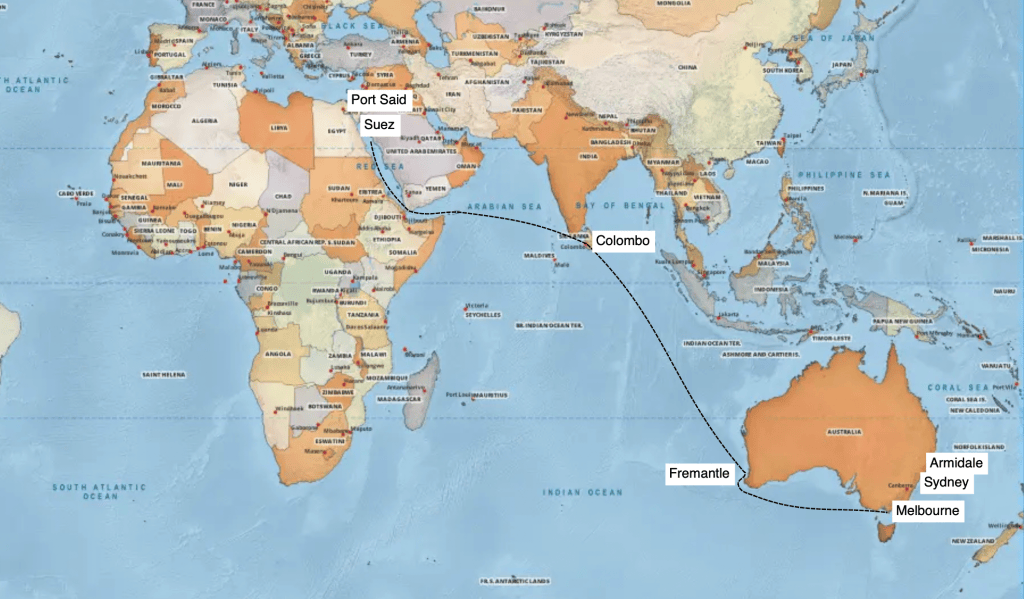
From the hospital at Port Said, Richard would’ve been transported by rail south to Suez, a journey of around ten to twelve hours crammed onto a train ‘composed of cattle trucks’. There, he likely spent several ‘dreary days in this desert port’ awaiting the arrival of the transport ship.
On 13th October 1918, one month before the end of the war, Richard embarked per the steam ship Devon, along with roughly 300 other men, for Australia. Because German U-boats and minefields were still active, the use of actual ship names (in radio signals and planning documents, for example) was heavily restricted. Transports, including those ferrying home the ‘1914 originals’, were given code names: Devon’s codename was ‘Transport L’. She was the first transport carrying 1914 originals to arrive back in Australia.
The use of code names, and the consequent omission of some ships’ names in newspaper reports – especially before the war ended – made it difficult to track the Devon’s movements, however I’ve managed to piece together a smidgeon of interesting information.
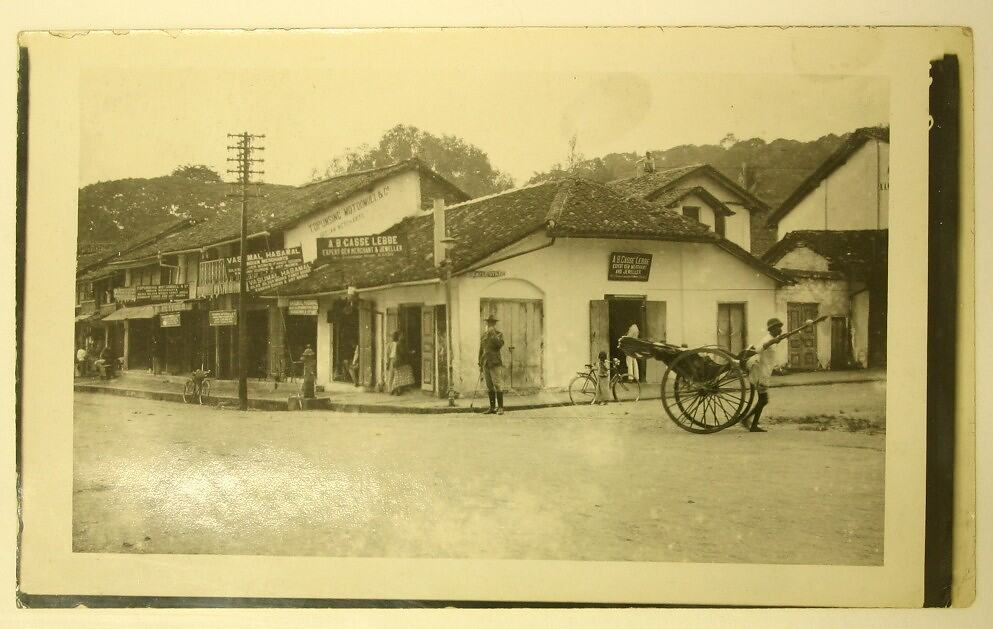
The Devon’s journey was broken at Columbo, Sri Lanka, ‘where the Australians spent a pleasant holiday sightseeing’. According to the Hobart Mercury, while they were in Sri Lanka, the men visited ‘a place situated in the hills some 70 miles from Colombo’. It’s impossible, from this vague description to know exactly where this ‘place’ was, however it’s likely to have been Kandy, ‘the cultural capital of Sri Lanka’.
Kandy is famous for the Temple of the Sacred Tooth Relic, a shrine that is believed to house the left canine tooth of the Buddha.
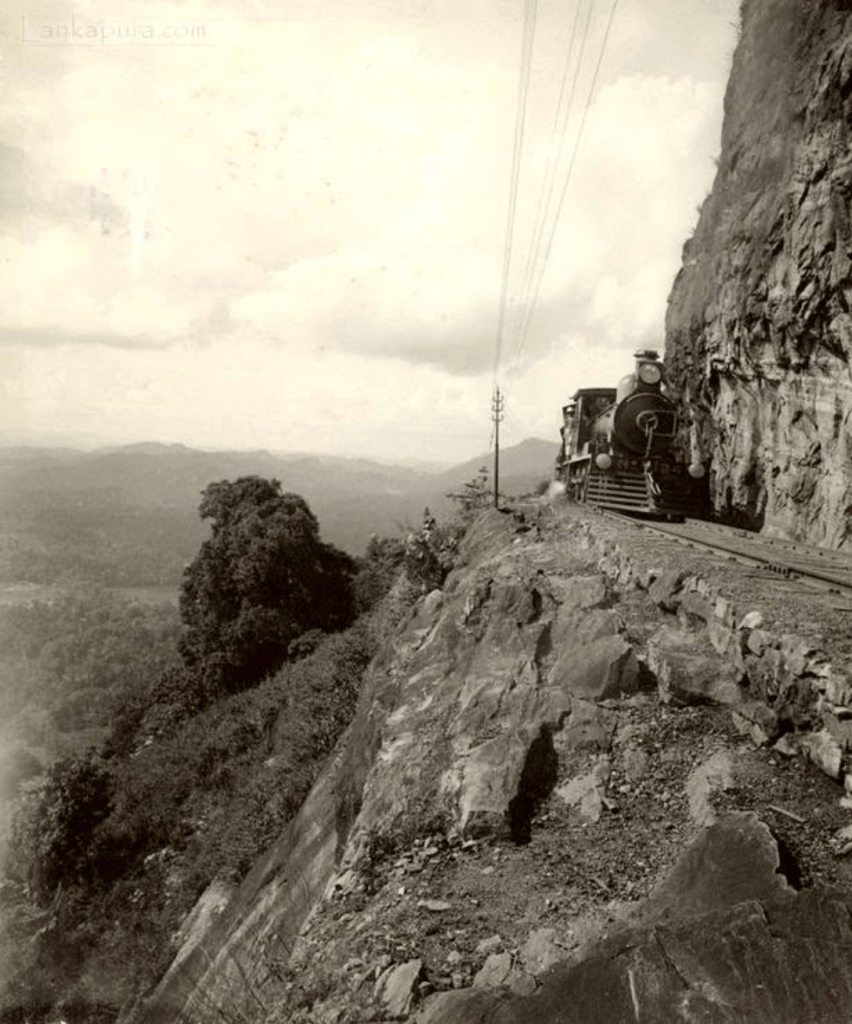
The troops, including Richard, probably travelled by rail on the line originally built to transport coffee from Kandy’s hill plantations to the sea port of Colombo. The mountainous route features tunnels and bridges, overhanging rocks, steep gradients and spectacular scenery.
In addition to exploring Kandy’s cultural highpoints, the troops might’ve also visited the city’s native markets and nearby tea plantations.
Once the men were back on board, the Devon continued her voyage across the Indian Ocean, a leg of the journey that reportedly ‘proved long and wearisome’.
At midnight, two days out from Fremantle in Western Australia, word arrived by wireless that the Germans had surrendered. An officer immediately announced the news to the troops, but it was said to have been received ‘with little excitement’. While a few men jumped out of bed and went on deck – ‘got together a few tin cans and made some noise’ – the majority, ‘with the nonchalance characteristic of many Australians’, simply rolled over and went back to sleep.
The Devon arrived in Fremantle on 14th November 1918, where she remained overnight and for the whole of the next day.
Despite growing concerns about the Spanish Flu – which was on the verge of becoming a global pandemic – the troops disembarked at Fremantle and travelled by rail to Perth for a ‘splendid reception’ before re-embarking and continuing on their way.
Subsequent transports were quarantined at both Fremantle and Melbourne making Richard and the other men aboard the Devon among the last of the troops to avoid that particular discomfort!
The Devon arrived in Melbourne on 23rd November 1918, six weeks after her departure from Egypt. A lengthy article in the Argus, which didn’t mention the Devon by name – but incorporated word-for-word part of the Hobart Mercury’s story that did – stated: ‘With the most heartfelt enthusiasm vast crowds welcomed back to Melbourne on Saturday the first of the parties of Anzacs to whom special leave was recently granted …’.
The ship, decorated with flags, ‘steamed quietly to the new pier at Port Melbourne just before 9 o’clock’ in the morning, the troops waving jubilantly from the decks to the crowds of people that thronged the roadways leading to the pier. The report stated that one of the officials waiting at the pier, Brigadier-General JK Forsyth, went aboard and received ‘a hearty welcome from his old comrades of the Light Horse’, one of whom was very likely Richard Jenkins.
The Governor General arrived and addressed the troops (‘such gallant company gives infinite confidence in the manhood and destiny of Australia’ etc) before the Victorian soldiers disembarked to ‘a right hearty reception’. Men from the other states were deprived of the reception’s festivities as they were required to remain on board until special transport trains could be organised.
While they waited those men, including Richard, would’ve been issued with two Anzac Leave rosettes, one for each shoulder of his uniform. The rosettes were intended to make it clear to the public that the wearer wasn’t shirking his duty.
At 12.35 pm on the same day that the Devon docked in Melbourne, Richard boarded one of two special trains bound for Sydney. The trains arrived, within minutes of each other, at Sydney’s Central Station just under 48 hours later, on 25th November 1918.
The station’s platform approaches were crammed with people and as the two trains pulled in ‘the large crowd gave three rousing cheers and the men were showered with confetti’. The Anzacs piled into about forty motor cars – the first of which was decorated with the word ‘Victory’ worked in a floral design – and drove in procession to the Anzac Buffet in the Domain. By the time the convoy had arrived at the Buffet, the cars were laden with oranges, sweets and more confetti.
Since its establishment in 1916, the Anzac Buffet – a gathering place for soldiers that was free of alcohol, gambling and ‘unattached women’, but did have a tame kangaroo and a pet lamb – had become the place for welcoming home returning soldiers.
It’s highly likely that Richard would’ve been met by family members at the Buffet, but the details of any such reunion have been lost to history. What we do know is that Richard was back in Armidale by 4th December 1918 when a civic reception was held for him and several others at the Armidale Town Hall. During speeches at that function one dignitary, referring to the recently-declared Armistice, commented (unfathomably!) that, though the men had ‘come back to familiar scenes and home, sweet home’, he imagined most of them ‘must feel a little sad, because they would have liked to have seen the business through’!
Richard had finally made it home, safe and (relatively) sound – at least physically.
So, what became of Richard’s horse? Is it likely (or even possible) that he shot it before he left the Middle East?
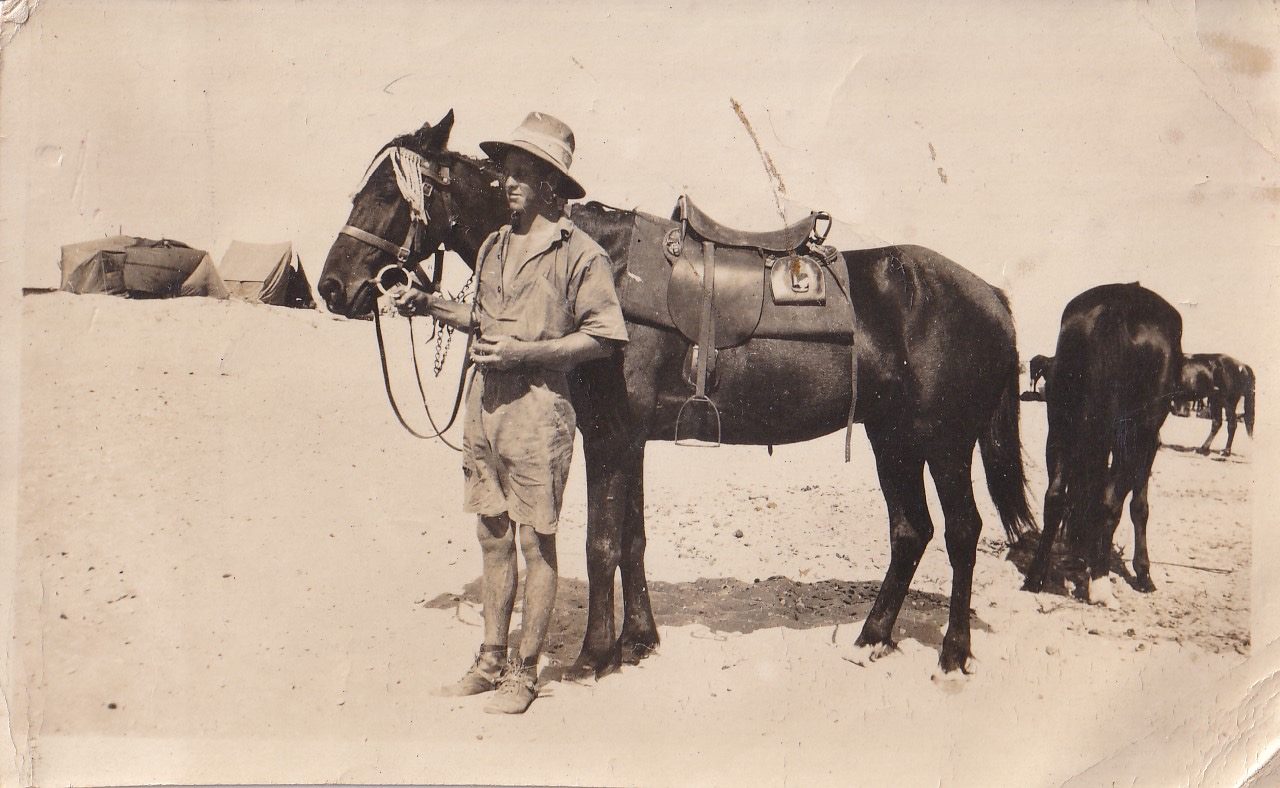
Australia shipped over 120,000 horses overseas during the war; about 29,000 of those served with Australians in Egypt and the Middle East. The Army preferred ‘Walers’, a type that was known to be sturdy, hardy and able to travel long distances in hot weather with little water. They were purchased from breeders and graziers right around Australia but became known as ‘Walers’ because they were originally sold through New South Wales.
It’s widely accepted in popular culture that many Anzacs did, as Penel asserted, resort to shooting their horses to avoid ‘leaving them with the Arabs’. But the more I read about this topic, the more I’m beginning wonder if Penel, who has since passed away, might’ve been conflating these general (and possibly mythical) stories with Richard’s actual war experience.
Leaving aside the official line that only old and sick horses were destroyed, and then only by authorised personnel (ie, not the men themselves), it’s unlikely that Richard would’ve been in a position to take the decision for himself without risking a severe reprimand.
When Richard stepped aboard the Devon at Suez in October 1918, the Armistice was still a month away. Further, for almost a month prior to his departure, he’d been languishing in hospital at Port Said suffering from malaria. It’s highly unlikely that, just before he was evacuated to hospital, he would’ve been brazen enough to shoot an animal that was still being used by the Allied forces in a war that had not yet ended.
When the war did end, the Army had to decide what to do with the horses. They couldn’t be sent back to Australia due to cost and the risk of introducing disease. Many men, understandably, worried about what would happen to their horses: among other things, Middle Eastern standards of animal treatment ‘affronted Australian sensibilities’. Despite the myth, however, there appears to be no evidence that the practice of soldiers shooting their mounts was widespread.
By the time of the Armistice, just under 10,000 of the almost 30,000 Walers sent to the Middle East remained. The official position states that in February 1919 vets examined the horses and that only those ‘riding horses over 12 years old …[and] unsound horses … were marked for destruction’. The Army’s records attest that just over 3,000 horses were destroyed in this way. The surviving horses were reissued to other imperial units, such as Indian Cavalry Divisions in Syria and the Australian Imperial Forces who fought in the Egyptian Rebellion (between March and April 1919).
The Australian War Memorial’s website states that ‘the very complete surviving horse inventories make it clear’ that the chances of ‘something untoward’ happening – ie, the men having their horses falsely classified and destroyed – were slim.
For Richard’s sake I hope, whatever the reality, that his horse went on to enjoy a happy and uneventful retirement!
Bibliography:
Australian War Memorial website, various pages including unit diaries.
WWI Service Record of Richard Charles Cludde Jenkins.
‘Who Do You Think You Are?’, Peter Hellier, series 14, episode 6, SBS On Demand.
‘Original Anzacs’, Maitland Daily Mercury, 25 November 1918, p 6, http://nla.gov.au/nla.news-article123420211.
‘Anzacs Welcomed Home’, Argus (Melbourne), 25 November 1918, p 7, http://nla.gov.au/nla.news-article1431167.
‘The Voyage to Australia’, Mercury (Hobart), 27 November 1918, p 6, http://nla.gov.au/nla.news-article11419287.
‘Home Again’, Armidale Chronicle, 7 December 1918, p 8, http://nla.gov.au/nla.news-article189770946.
‘Transport Scandal’, Mail (Adelaide), 14 December 1918, p 2, http://nla.gov.au/nla.news-article63754346
 Unravelled